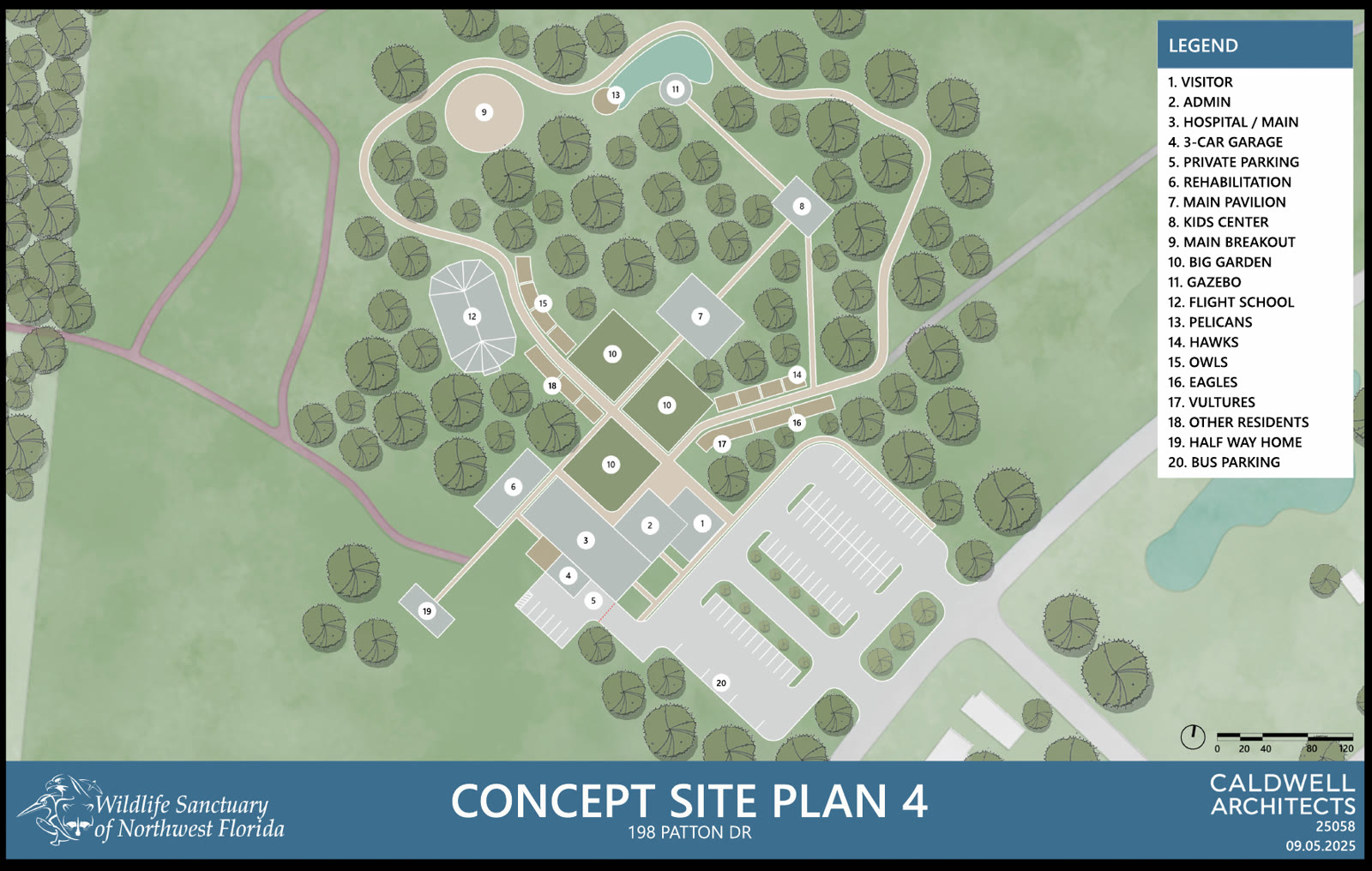
The concept drawing is the shape. This is the substance behind it: what the hospital can't do today, what the new one is designed to do, and the numbers the sanctuary put in writing for the county and its grant reviewers.
A dedicated surgical suite, advanced diagnostic imaging, and expanded treatment areas, with a part-time veterinarian, vet techs, and externships to staff them. A suspected fracture gets a radiograph the day it arrives instead of waiting on access.
Today: diagnostic access is limited; a portion of patients get delayed or constrained care during peak intake, and surgery depends on a partner vet donating time.
Purpose-built pools and convertible stalls with sloped floors: shallow water for feather conditioning and waterproofing, drained and dry for a mammal. Water-dependent birds can't be released until they can float, feed, and stay dry again.
Today: no dedicated aquatic infrastructure at all.
Large and small flight enclosures with moveable elements, reconfigured to whoever is in them. Birds rebuild endurance progressively before release, which is what post-release survival depends on. About 95 percent of admitted birds need it.
Today: 3 raptor and 2 songbird flight enclosures. Birds wait two to four weeks for space.
Dedicated isolation units and expanded rabies-vector space, plus diagnostics that catch disease earlier. In a hospital admitting forty animals a day in baby season, keeping the unknown cases apart is what protects everyone else.
An intake and hotline specialist backed by trained volunteers, so the calls that come in every day get timely guidance and the right animal gets to the right door. A field response team is planned as funding allows.
Today: two full-time staff field the hotline between patients.
Upgraded systems to track intake location, injury cause, and outcome for every patient, so hotspots for fishing-gear entanglement and collisions become visible and actionable. Room for student and partner research. This is the intake map, built into the building.
Existing canopy preserved, native plantings, permeable surfaces, stormwater managed on site so nothing runs off into the watershed. Releases happen on the property, in restored habitat, which lowers stress on the animal and improves the odds it stays wild.
Flood-resistant design and expanded intake so the hospital keeps working through the weather that sends the most patients. The Gulf Coast's worst wildlife weeks are the weeks the current building is least able to help.
Today: five floods have entered the building. The hospital has stayed open every time, at a cost.
Programs aimed at the most common, most preventable admissions: fishing line, window strikes, well-meaning people raising wildlife at home. The sanctuary reaches roughly 1.3 million people a year across in-person programs, digital outreach, and partners; the Kids Center and pavilion give that work a home.
| Metric | Today | New facility |
|---|---|---|
| Birds treated a year | ~1,686 | +25 to 40% |
| Outdoor rehab capacity | ~20 raptors, 40 songbirds, 20 shorebirds | At least double, every group |
| Flight conditioning at once | ~15 raptors, 30–40 songbirds | About double, flexible systems |
| Flight enclosures | 3 raptor, 2 songbird | Multi-unit raptor system + 10-unit songbird structure |
| Aquatic bird capacity | None | Dedicated enclosures and conditioning pools |
| Wait for flight or aquatic space | Up to 2–4 weeks | Eliminated by design |
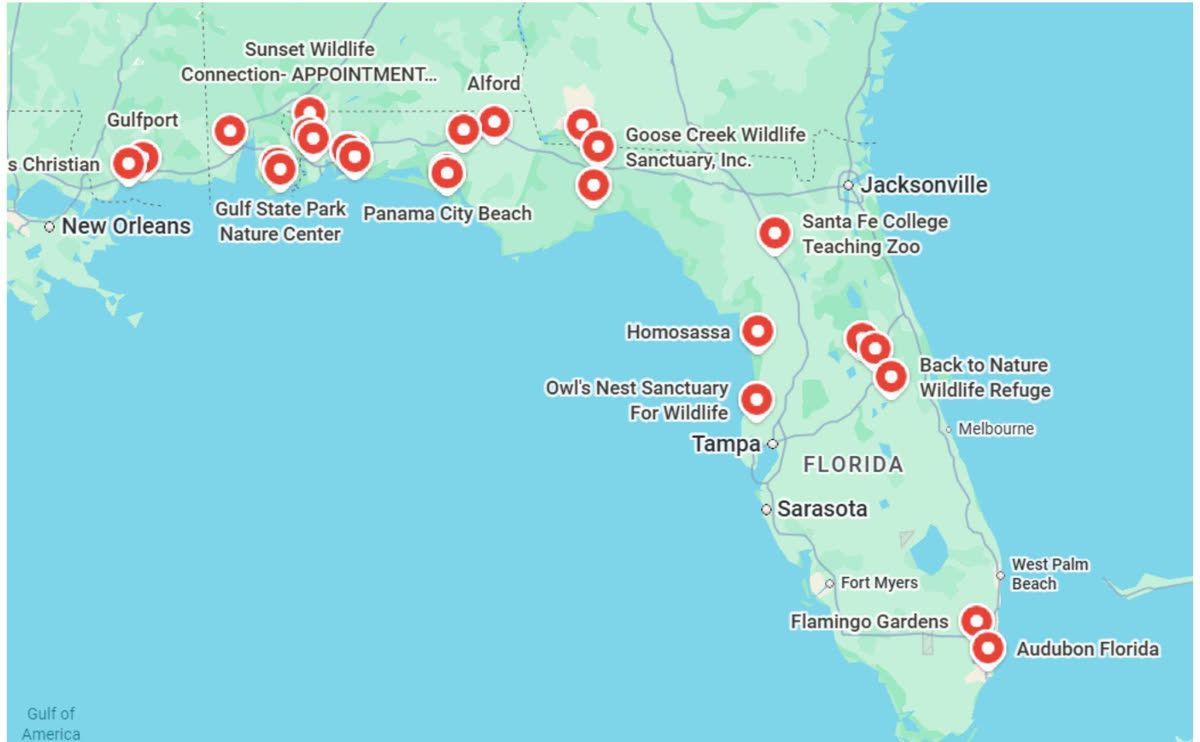
The sanctuary is an intake and treatment hub in a network of rehabilitators from New Orleans to Jacksonville, receiving and transferring patients so each gets the right level of care. A bigger hospital absorbs more of the regional caseload when a storm floods the coast with injured birds. Audubon Florida's Coastal Team sends state-threatened Least Terns and Black Skimmers here; they wrote in support of the build.
Source: "Expansion of Regional Bird Rehabilitation Capacity to Support Gulf Coast Population Recovery," the Wildlife Sanctuary of Northwest Florida's facility proposal (May 2026), and Caldwell Architects' Concept Site Plan 4 (Sept 2025). Program and capacity figures are the sanctuary's own projections; buildings, sizes, and placement are subject to final design.